

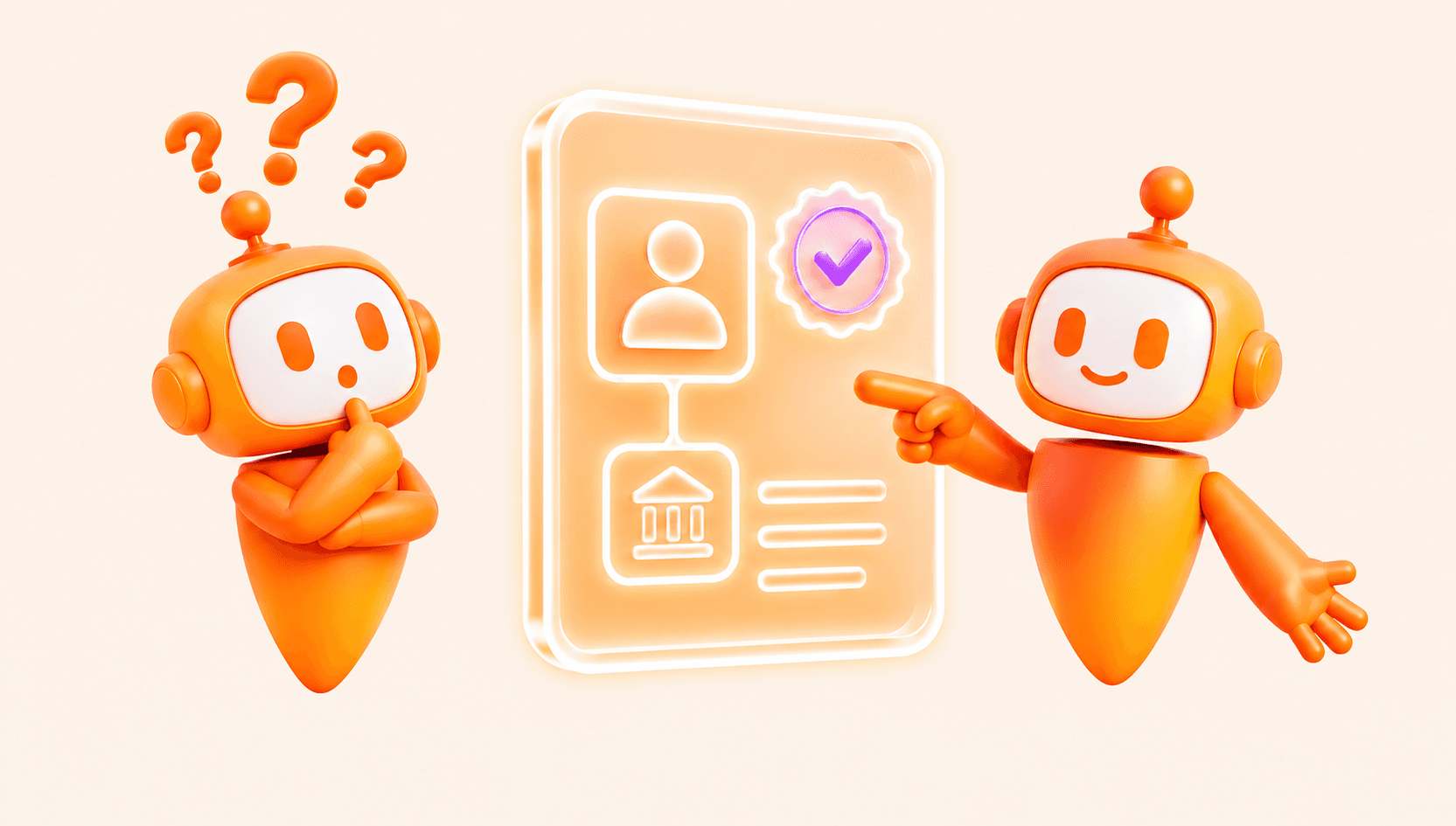
What Is "Know Your Agent" (KYA)? Why AI Agents Need a Verified Identity
AI agents are beginning to do more than answer questions. They can access digital services, retrieve business information, coordinate with other systems and carry out transactions.
However, if you or your systems encounter an AI agent, how do you know you can trust it? That’s what we’ll explore in this article.
What is Know Your Agent (KYA)?
KYA is a framework for identifying AI agents and verifying the authority they have been given.
It connects three pieces of information:
- The agent’s identity: which AI agent is making a request.
- The accountable owner: the person or organisation the agent represents.
- The agent’s authority: the services it may access and the actions it may perform.
An identity alone does not give an agent permission to act. The owner must grant specific authority, and a service can check that authority when the agent requests access or attempts an action.
This makes KYA different from simply giving an AI agent an account or login. KYA is intended to help a service assess not only which agent is connecting, but also who stands behind it and whether its requested action falls within approved limits.
What Can KYA Help Verify?
A KYA framework can help a service check:
- Who is acting: the identity of the AI agent making a request.
- Who is accountable: the person or organisation linked to the agent.
- What the agent may do: its approved services, data access, counterparties and transaction limits.
- Whether a requested action is authorised: whether it fits the permissions granted.
- What happened: evidence of agent activity that can support review.
Identity, permissions and activity records work together. Each answers a different question about the agent’s actions.
Why Do AI Agents Need Verified Identities?
When a human user signs in, a service can apply identity checks and permissions to that person. As AI agents begin acting on behalf of people and organisations, services also need a way to verify the agents themselves.
Without reliable identity and authorisation, an organisation may find it difficult to distinguish an approved agent from an unauthorised system, determine what an agent was allowed to do, or establish responsibility when an action needs review.
KYA helps to identify the agent, delegate permissions, define its boundaries, and record of activity to show what it did under that authority. These controls can help organisations adopt AI agents while maintaining oversight of access and actions.
How Does KYA Work?
KYA links an AI agent to an accountable owner, gives it defined permissions and allows services to check those permissions when the agent acts. Here are examples of how that can work in different situations.
Making Supplier Payments
A company authorises an AI agent to pay approved suppliers up to $5,000 per transaction. Before processing a payment, the service checks the agent’s identity, the supplier and the amount. A payment above the limit requires human approval. The company can revoke the agent’s payment permission if its role changes.
Accessing Business Information
A company gives an AI agent access to selected project documents so it can prepare a progress summary. When the agent requests a document, the service checks whether its identity is linked to the company and whether it has permission to access that information. The agent cannot use the same permission to open restricted financial or personnel records.
Booking Business Travel
A company authorises an agent to book flights and hotels for employees within an approved budget and travel policy. The agent can complete bookings that meet those conditions. If a trip exceeds the budget or falls outside the policy, it must request approval before proceeding.
Handling A Customer Service Request
A business authorises an AI agent to check order status and arrange replacements for eligible purchases. When a customer asks for a replacement, the service verifies that the agent represents the business and that the request meets the company’s replacement rules. The agent cannot issue refunds or change account ownership unless those permissions have also been granted.
Delegating A Task To Another Agent
A purchasing agent asks a specialist agent to check supplier availability. The second agent receives only the access needed for that task. It cannot approve a purchase or spend money if the original agent was not authorised to do so. The delegation can be traced back through the agents to the organisation that granted the original permission.
Across these examples, the KYA technology verifies the agent, confirms who it represents, checks that the action fits its permissions, and keeps evidence of what happened.
Zetrix AI And CAICT Launch A KYA Service
Zetrix AI Berhad and the China Academy of Information and Communications Technology (CAICT) have launched a Know Your Agent service designed to bring verifiable identity and delegated permissions to AI agents.
The service builds on W3C Verifiable Credentials and incorporates AvatarLabs’ Agentic Wallet technology to manage digital credentials, verify delegated permissions and maintain evidence of agent activity.
The announcement also includes a planned cross-border pilot involving organisations in the Middle East, Africa, China and ASEAN. The pilot is intended to explore how agent identities and permissions can be recognised across jurisdictions while respecting local identity systems and trust decisions.
Findings from the pilot are intended for submission to the International Telecommunication Union (ITU), IEEE and other standards organisations for consideration in ongoing discussions about global AI identity and accountability approaches. This work will contribute to those discussions; it does not mean that a global KYA standard has already been adopted.
Why Does Cross-Border Interoperability Matter?
An AI agent may need to interact with services in more than one country. Each service needs a way to assess the agent’s identity and authority while following its own rules and trust requirements.
The planned pilot will explore how identity and permissions can be recognised across different jurisdictions. Potential areas of application include cross-border trade, digital payments, government services and interactions between autonomous AI agents.
Interoperability could help agents work across systems while allowing organisations and jurisdictions to retain control over their identity infrastructure and trust decisions.
Contribute to the Future of AI Trust and Accountability
If you or your organisation is interested in implementing the future of international AI standards, join the Focus Group on Trust and Identity for Humans and Agentic AI.
Join the PilotBuilding Trust As AI Agents Take On More Responsibility
As AI agents gain the ability to access services and carry out tasks, organisations need ways to verify both the agent’s identity and the authority behind its actions.
KYA offers a practical model: link each agent to an accountable owner, define clear permissions, check those permissions when the agent acts, and maintain evidence of activity. Zetrix AI and CAICT’s service and planned cross-border pilot are intended to test how these capabilities can support trust and interoperability across organisations and jurisdictions.
Frequently Asked Questions
What does KYA stand for?
KYA stands for Know Your Agent. It refers to verifying an AI agent’s identity, the person or organisation responsible for it, and the authority it has been granted.
How is KYA different from KYC?
Know Your Customer (KYC) processes focus on verifying people or organisations. KYA extends identity and authorisation checks to AI agents acting on someone’s behalf.
Does a verified AI agent have permission to do anything?
No. A verified identity establishes which agent is making a request. The agent’s permissions define what it may do. Those permissions can be limited and revoked.
Can an AI agent delegate its permissions?
KYA can support controlled delegation, where a downstream agent is not given more authority than the original agent received. The delegation can also be made traceable.
Is KYA already a global standard?
The Zetrix AI and CAICT initiative is contributing to ongoing discussions about AI agent identity and accountability. A global KYA standard has not been established through this announcement.
The Next Step In Securing The Autonomous Future
Learn how Zetrix AI and CAICT are building identity infrastructure for AI agents.
Read More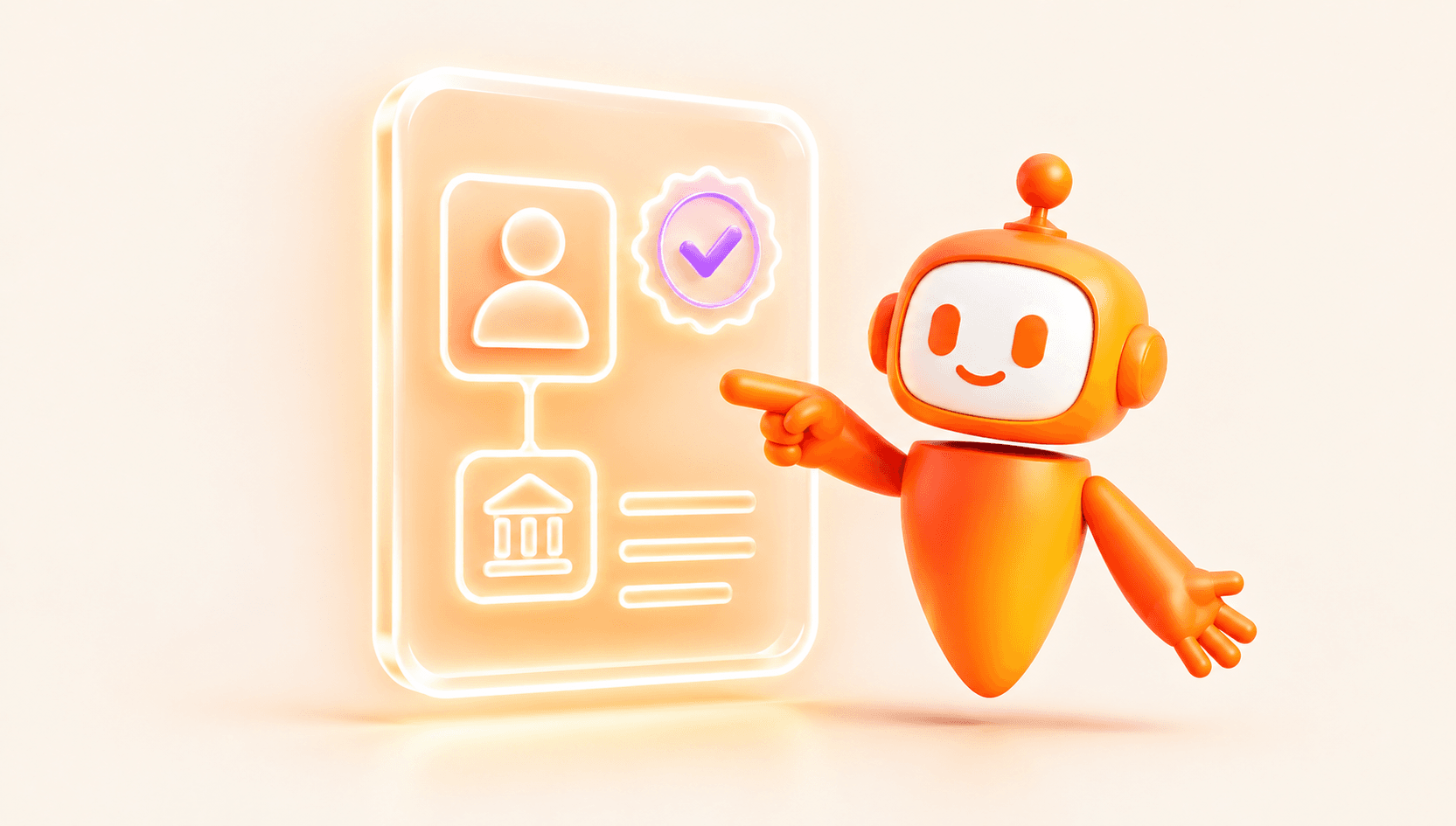 TRUST & IDENTITY
 INTEGRATIONS
 INTEGRATIONS